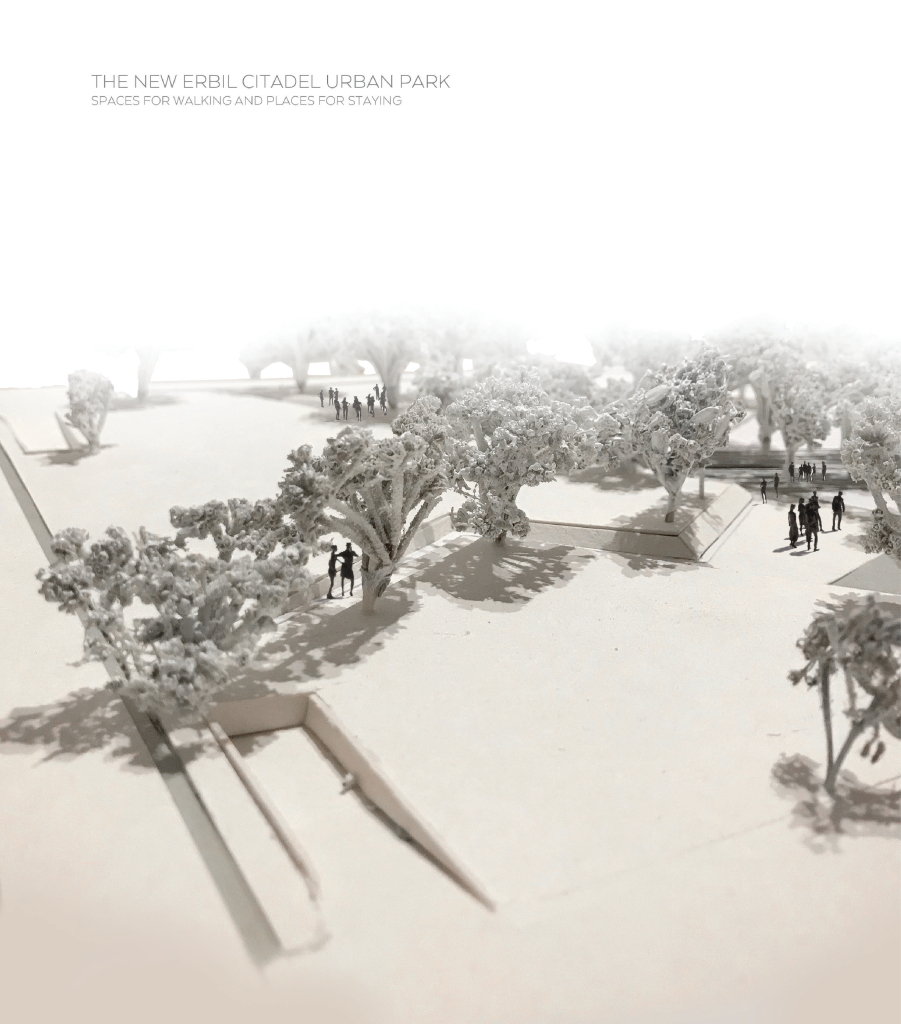
A harmonious blend of nature and urbanity
A harmonious blend of nature and urbanity
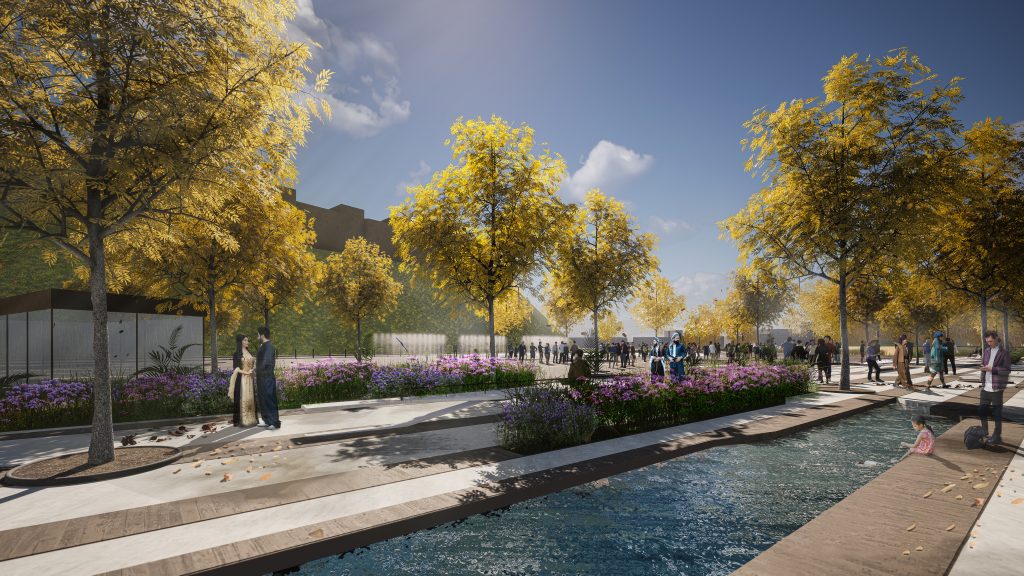
The new Citadel Urban Park is located at the historic and cultural heart of the city, surrounded by valuable vernacular architecture and anchored by the Citadel, whose origins date back to 6000 BC. The project seeks to unify these historical, social, and architectural layers into a cohesive landscape design that carefully reflects local form, materials, colors, and details while accommodating diverse activities for different user groups. At the same time, it addresses broader urban challenges in the Kurdistan Region, such as the limited use of public open spaces and the absence of bicycle routes, by encouraging walking, gathering, and social interaction, ultimately fostering a stronger culture of outdoor urban life within this significant historical context.
The first step of the strategy is to enhance the quality of urban green infrastructure. Located among major public parks, the site offers strong potential for ecological connectivity and increasing biologically active surfaces. By creating a “green network,” the design supports biodiversity and enables wildlife movement within the dense urban fabric. The project also promotes public awareness, reduces carbon emissions, improves hygiene and air quality, and provides shaded spaces for social interaction and light physical activity.
Secondly, the park aims to enrich cultural and architectural heritage by creating inclusive public spaces that function as gathering points while strengthening local identity and social engagement. Finally, informed by research on walking and staying in urban spaces, the design introduces attractive activities that respond to community needs and encourage people to use and remain in the park.
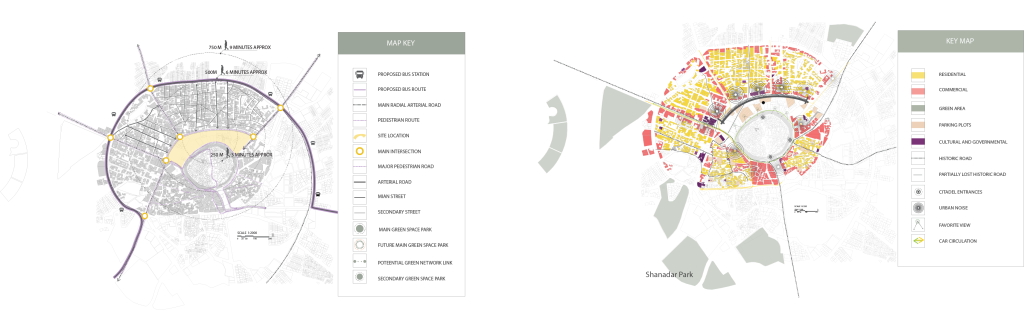
Land use and Connectivity Functional Map
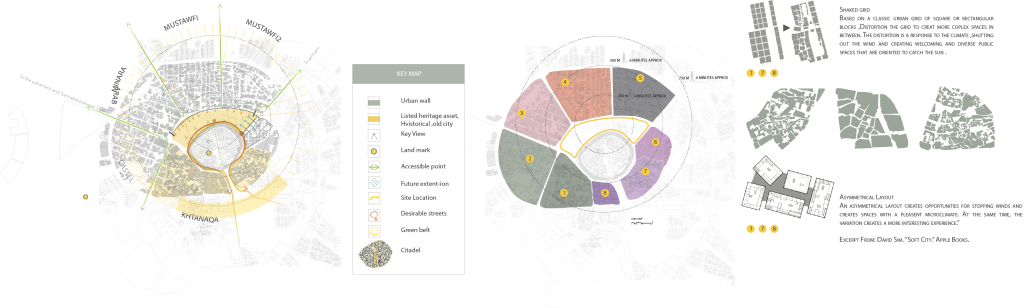
Opportunities and Urban character map
Frontage and Contextual Appraisal
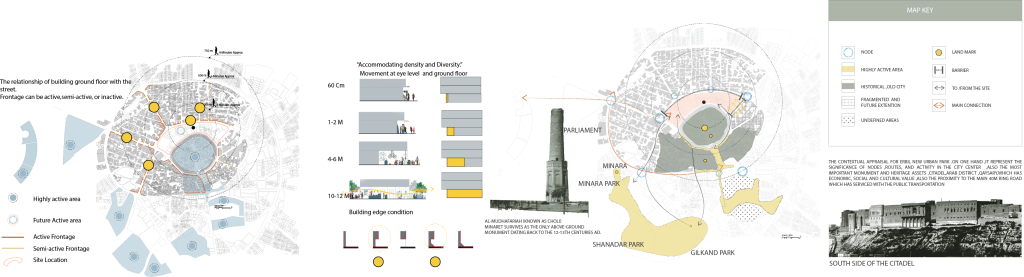
The project concept is inspired by local vernacular architecture, aiming to enhance, preserve, and reflect the architectural identity, urban pattern, and surrounding elements of the site. The primary circulation routes between residential spaces are derived from traditional social patterns, responding to the microclimate and long-established transportation practices. The character of the place is further expressed through the use of local materials and architectural elements representing the various historical periods the site has experienced. Overall, the project seeks to enrich the social, cultural, and economic life of the community by introducing diverse activities that strengthen people’s sense of place and belonging.
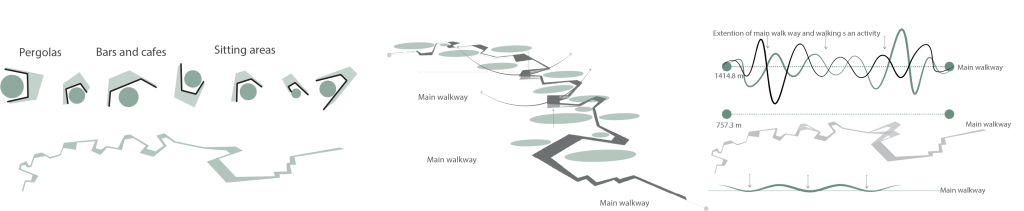
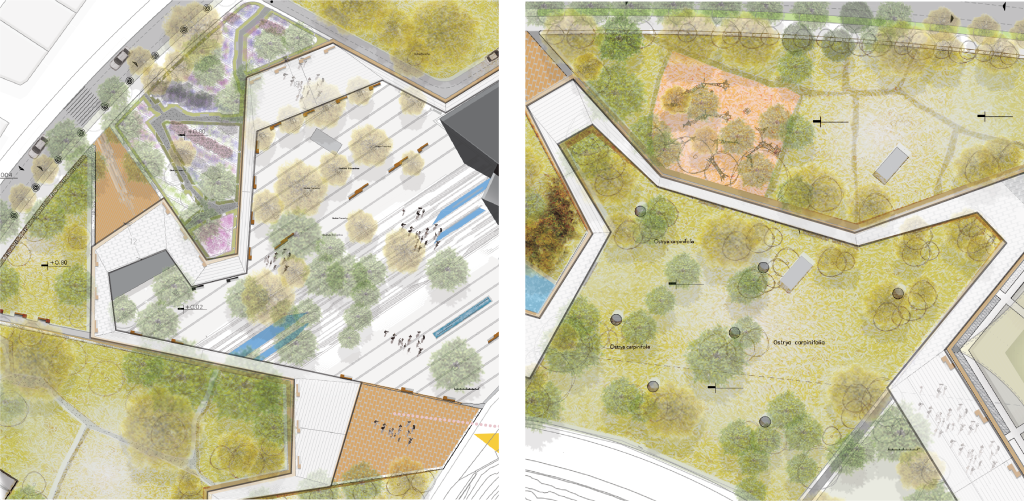
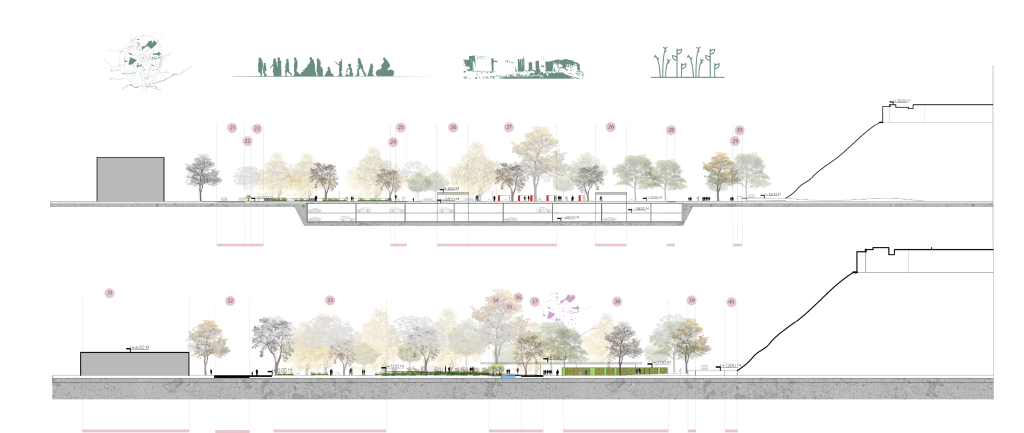
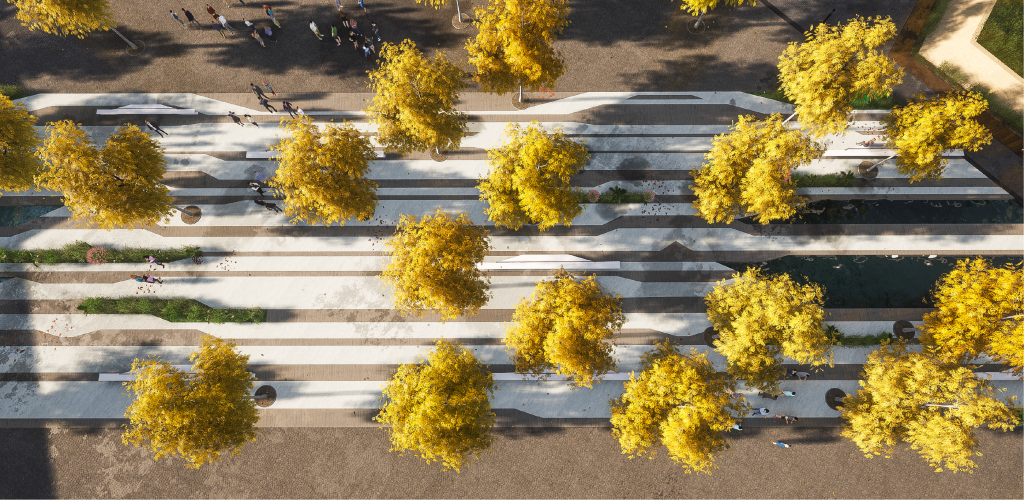
The park will serve as a new central urban landmark, accommodating key cultural hubs, meeting spaces, and gathering points while presenting a distinctive cultural and social gateway to Erbil and the wider Kurdistan Region, welcoming both residents and tourists. It will place the community at the heart of urban transformation by providing inclusive spaces for artists, students, and local residents to engage in cultural and social activities. Ecologically, the park will enhance biodiversity, contribute to carbon dioxide reduction, and mitigate urban heat during the hot season. Furthermore, it will strengthen the city’s green infrastructure within the urban open-space system and enrich Erbil’s architectural and cultural heritage.
For the full details you can click here