A harmonious blend of nature and urbanity
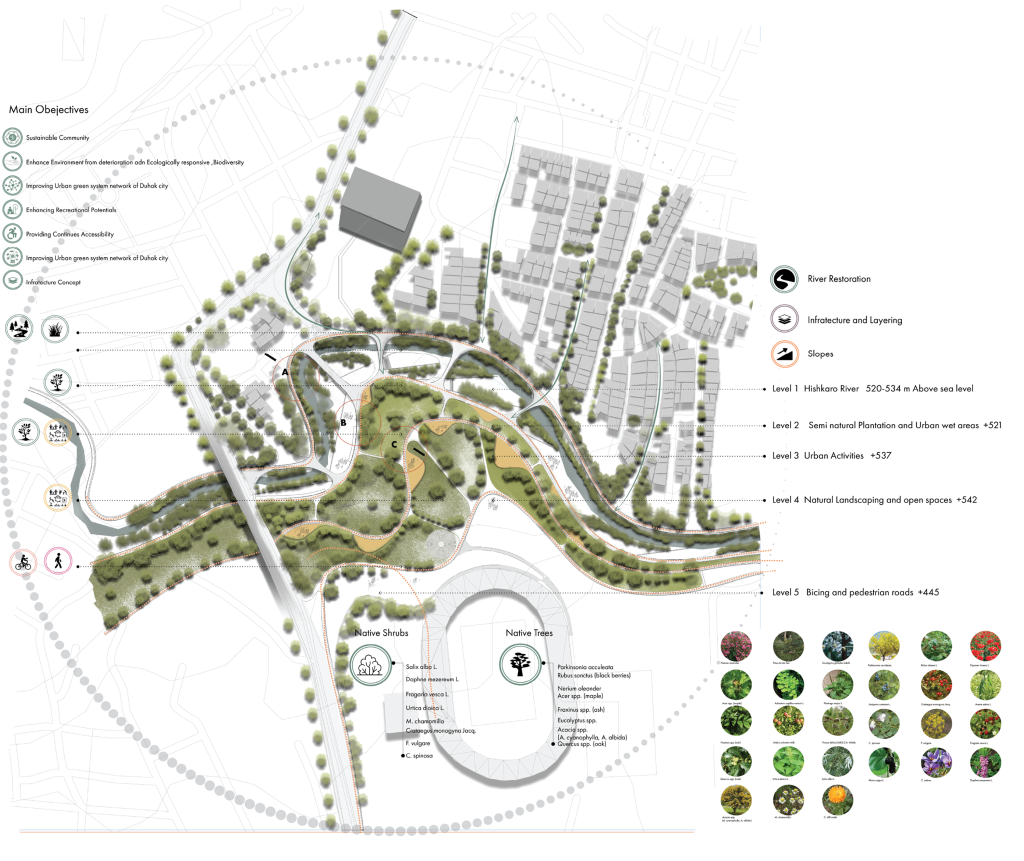
Rapid urbanization in Duhok City, Iraq, has severely altered the natural structure of the Hishkaro River, turning it from a vital ecological corridor into a degraded drainage channel. The river faces critical challenges, including hydrological instability, pollution, informal riverbank development, and increased food risk. Conventional engineering approaches (gray infrastructure) have failed to address these complex socio-environmental issues. Consequently, this project proposes a Regenerative Framework that integrates Nature-Based Solutions (NBS), Biophilic Design, and Infratecture. This unified strategy aims to reconnect the river with the urban fabric, transforming it into a multifunctional socio-ecological corridor that enhances resilience and quality of life.
Concept Development
The project is built on a regenerative framework that actively intertwines Nature-Based Solutions (NBS), Biophilic Design, and Infrastructure. NBS restores ecological vitality and food resilience through green Infratecture like wetlands, while Biophilic Design deepens the community’s connection to nature through sensory-rich, accessible landscapes. This is unified by Infratecture, which transforms static engineering—such as bridges and roads—into multifunctional social spaces, effectively turning the river from a divided drainage channel into a cohesive, living urban artery.
Project Goals
The primary goals of the Hishkaro River restoration are to:
Restore Ecological Function: Re-establish riparian ecosystems and biodiversity through natural processes.
Enhance Resilience: E ectively reduce ood exposure and improve water and air quality.
Improve Social Engagement: Create accessible, safe recreational spaces that strengthen the community’s connection to nature.
Integrate Infrastructure: Transform technical infrastructure (roads, bridges) into multifunctional ecological and social systems.
Establish a Transferable Model: Provide a regeneration model for other rapidly urbanizing cities in arid and semi-arid regions.
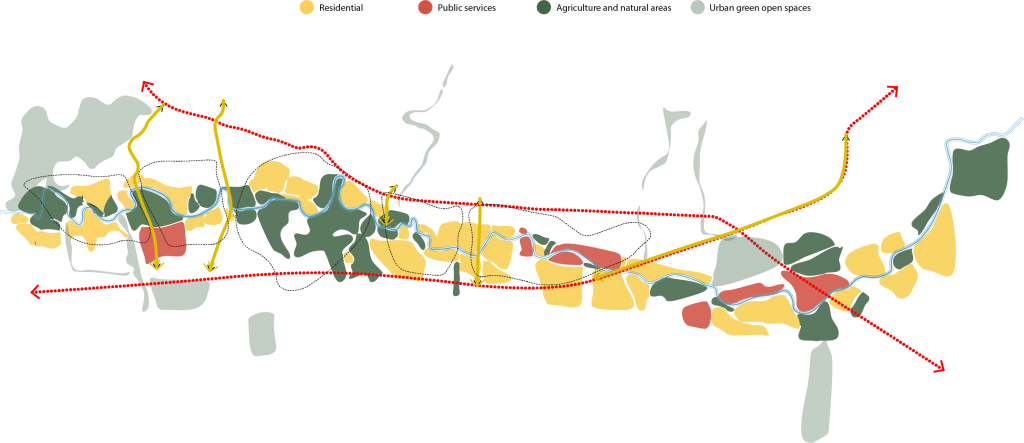
Land use and Functional Map
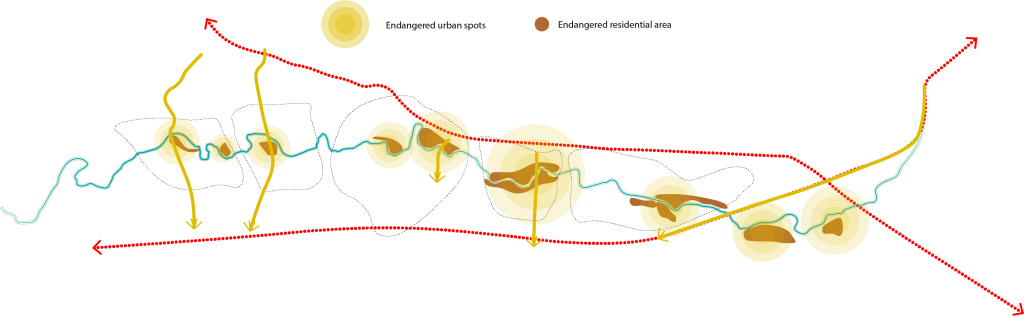
Endangered Urban Sprawl
Noise and air quality
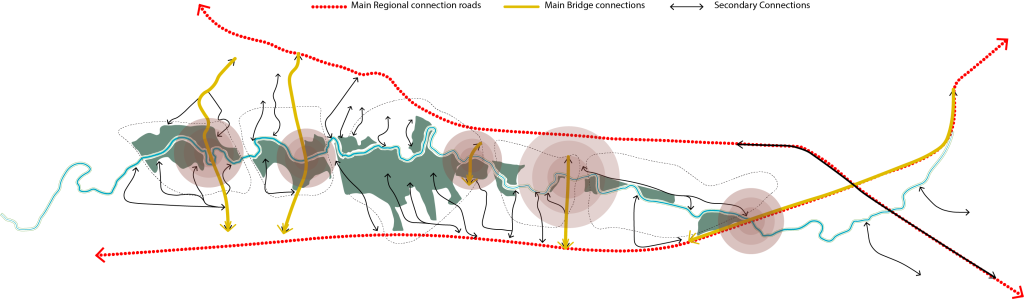
Connectivity and Traffic
Green areas and open spaces
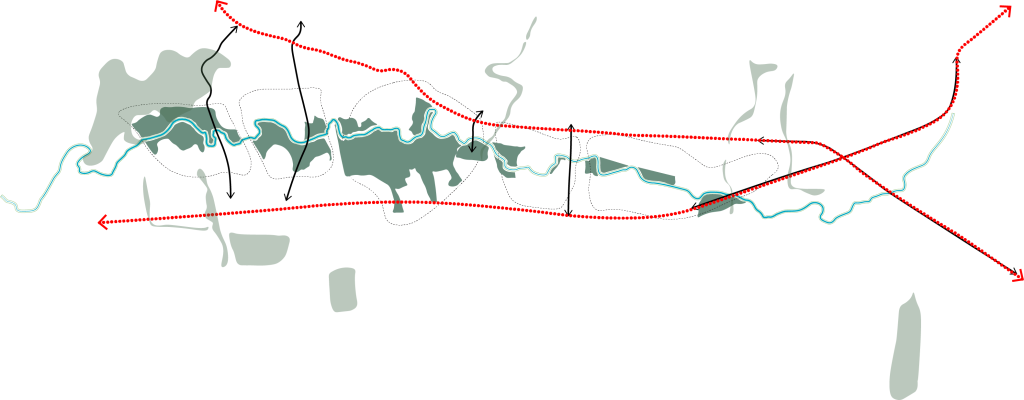
Current existing NBS potentials and elements
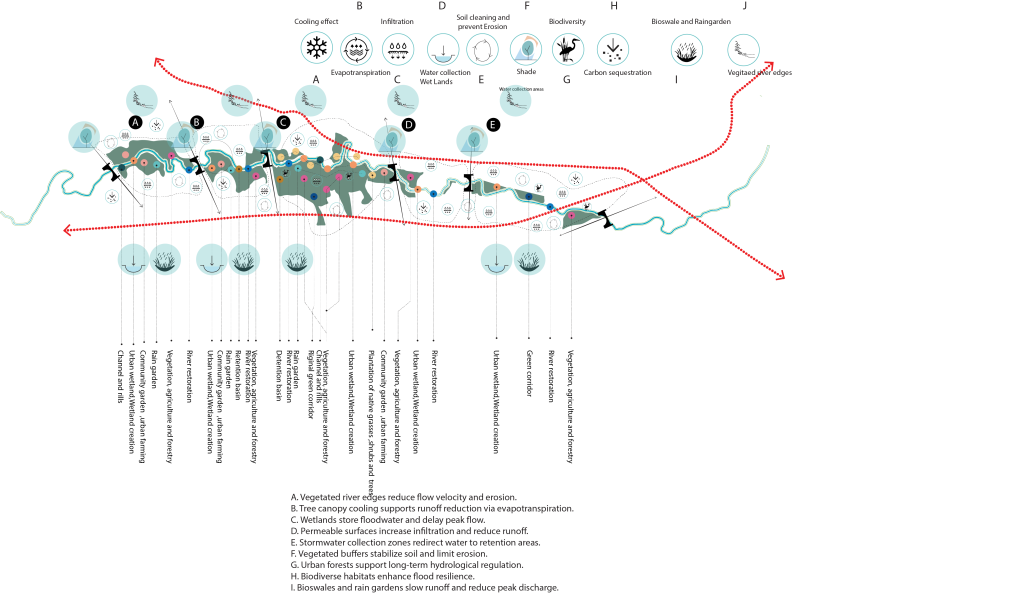
Ecological Development for NBS
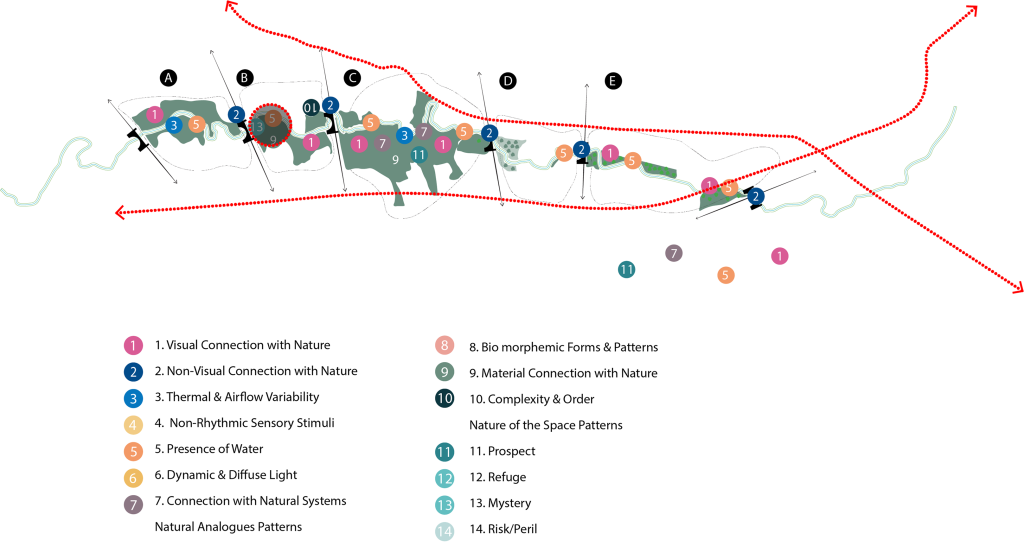
Biophilic Patterns
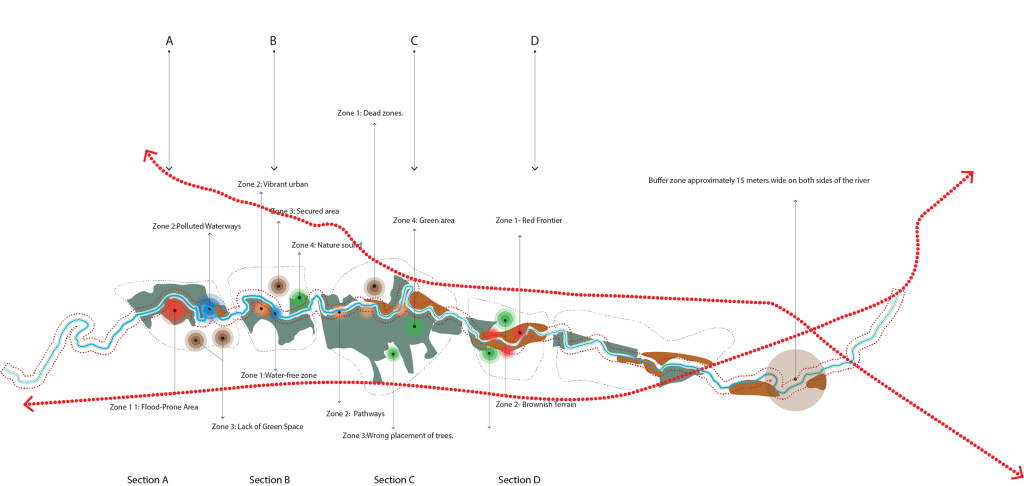
Potential and Conflict map
Infratecture and Layering
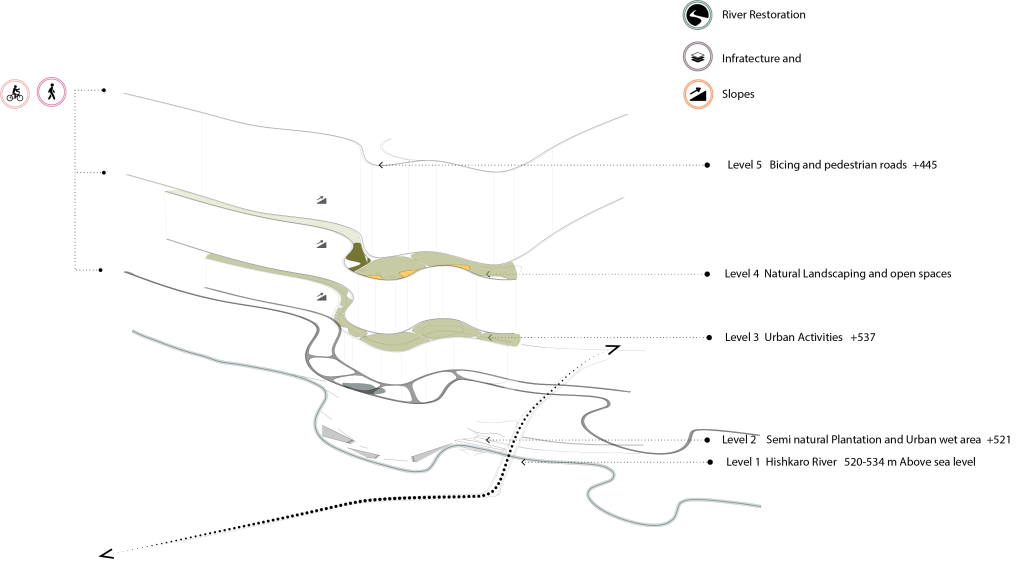
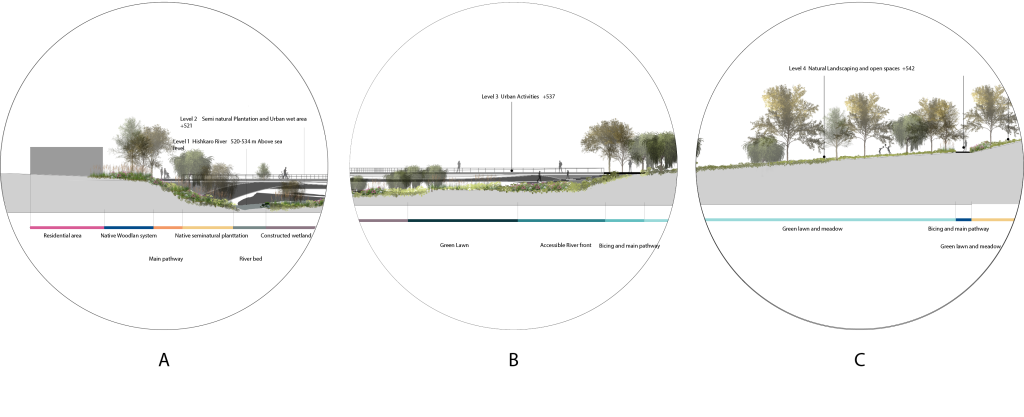
In conclusion, the Hishkaro River restoration project demonstrates that shifting from conventional gray infrastructure to a regenerative, multi-disciplinary framework is essential for revitalizing Duhok’s urban ecosystem. By weaving together Nature-Based Solutions, Biophilic Design, and Infratecture, the proposal effectively transforms the river from a neglected drainage channel into a resilient socio-ecological corridor that mitigates food risks while restoring biodiversity. Ultimately, this holistic strategy reclaims the river as a vital community asset, proving that integrating ecological restoration with urban functionality can significantly enhance both environmental health and the social quality of life in arid, rapidly urbanizing regions.