Statue: Finalist
Timber small vacation Homes
Reusing roof top Barcelona Competition 2024 with partnership with
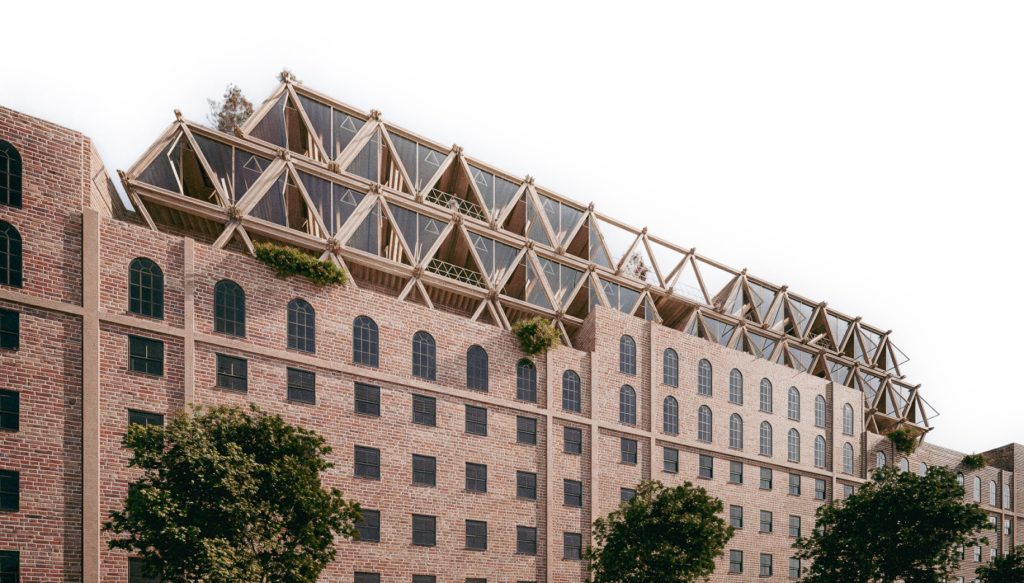
Concept Development
Contemporary urban development, wood has emerged as a vital material. Its importance is underscored by the need to address rapid urban expansion and find alternatives to traditional, unsustainable construction materials. Innovative approaches and advancements in wood manufacturing have positioned it as the most sustainable material in terms of minimizing carbon footprint and mitigating climate change. Furthermore, wood’s flexibility makes it highly suitable for construction and a primary component of bio-organic materials.
Given the increasing scarcity of space within urban environments, repurposing existing rooftops offers a viable solution. Instead of converting
agricultural lands and natural areas such as forests and arable lands, rooftops—constructed across various eras—can be utilized for multiple functions, including residential, office, community gatherings, and services. This approach presents significant potential for integrating complex modular designs with green elements. These elements can include green roofs, community gardens, specimen trees, and photovoltaic systems for renewable energy production.
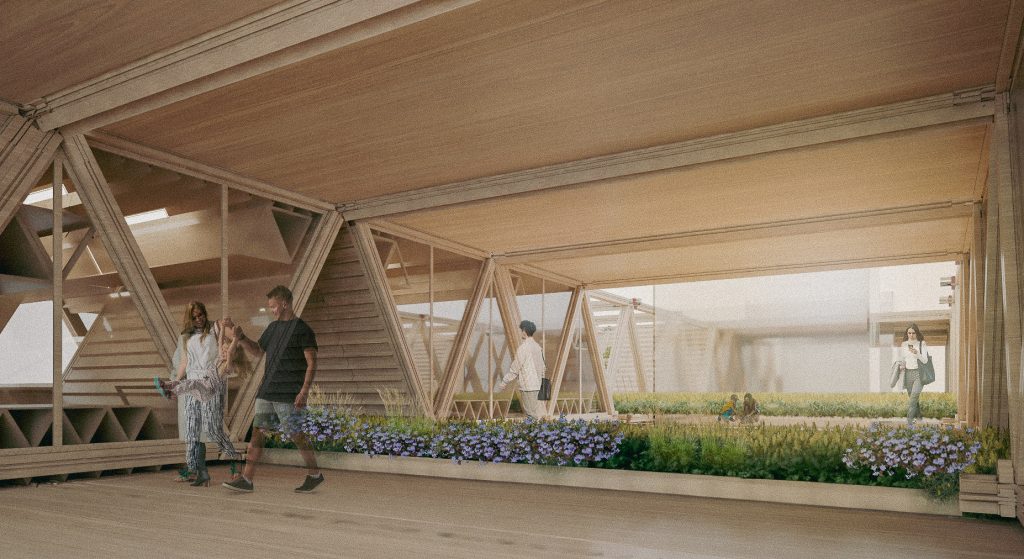
The potential applications of wood-based modular units are vast. These units are characterized by flexibility, adaptability, and modularity, allowing use in diverse European contexts and locations—not just in Barcelona. They can be expanded and extended in numerous ways to serve various purposes. Wood’s lightweight structure allows it to be affixed to rooftop buildings constructed with concrete blocks, skeleton systems, and steel structures. This versatility means that wooden units can be installed in any suitable location within an urban block, enhancing the functionality and sustainability of existing urban spaces.
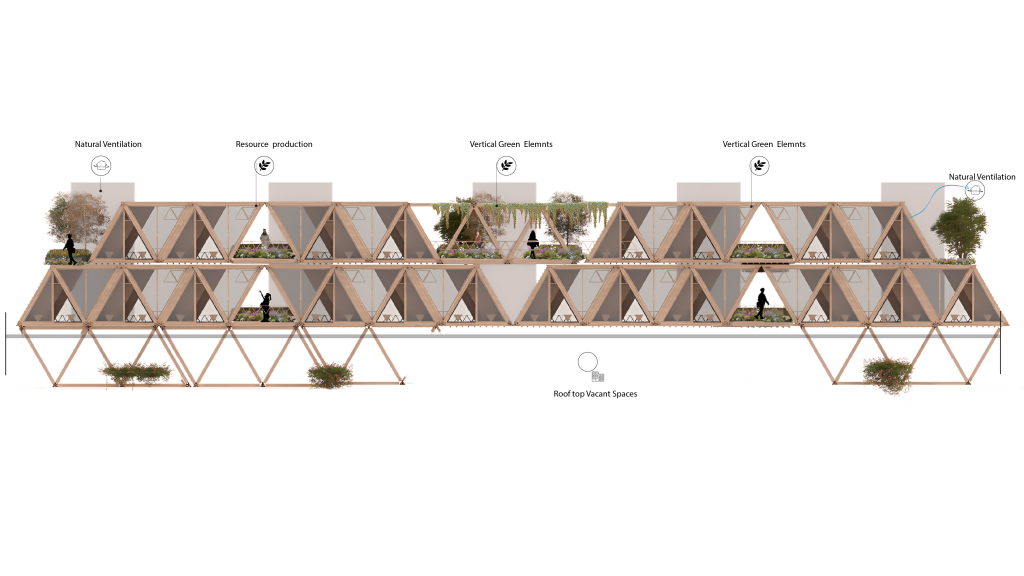
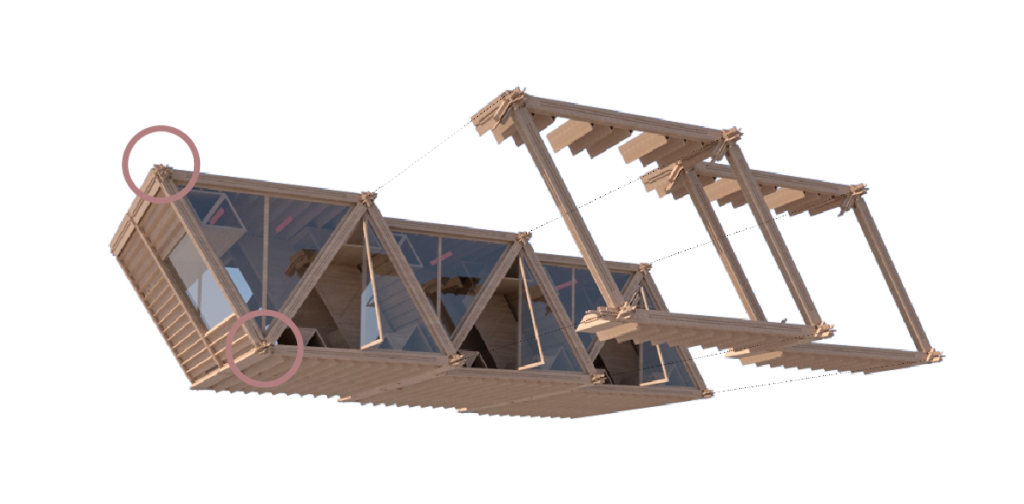
Progressive Unite
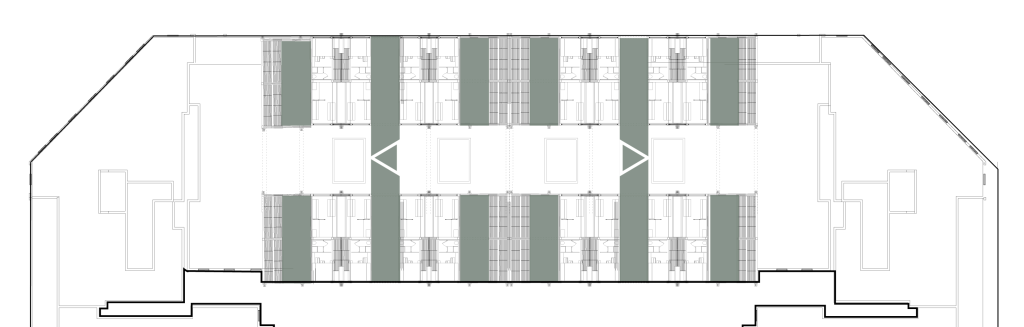
The red crossed sign, featuring a triangle within the knot’s extension, symbolizes the potential for expansion, transformation, and adaptation of desirable units. This emblem represents the beta design concept, capturing our dynamic needs and evolving lifestyles, where nothing remains static. The complex offers opportunities for both vertical and horizontal expansion, responding to emerging needs. The building is engineered to embrace perpetual change, ensuring adaptability for the future.
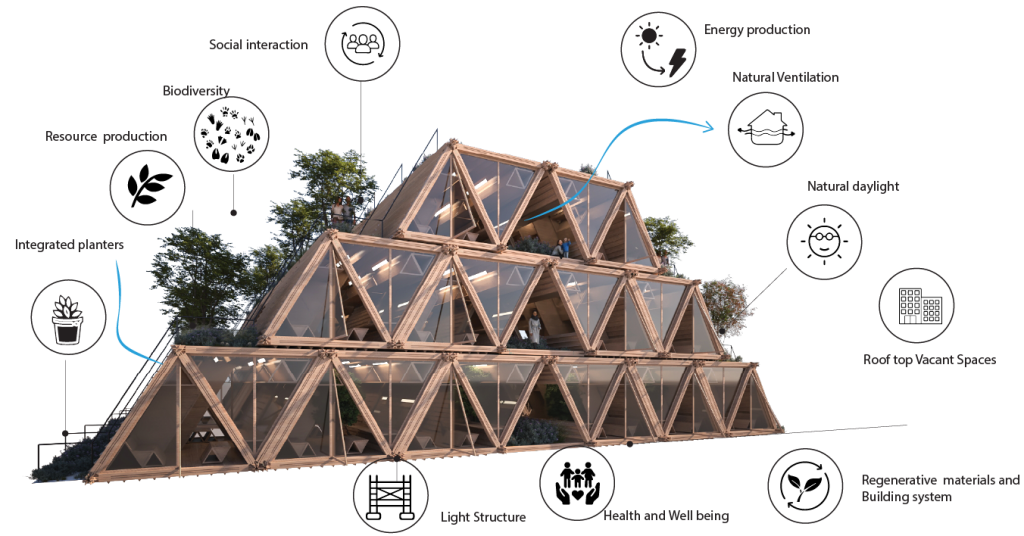
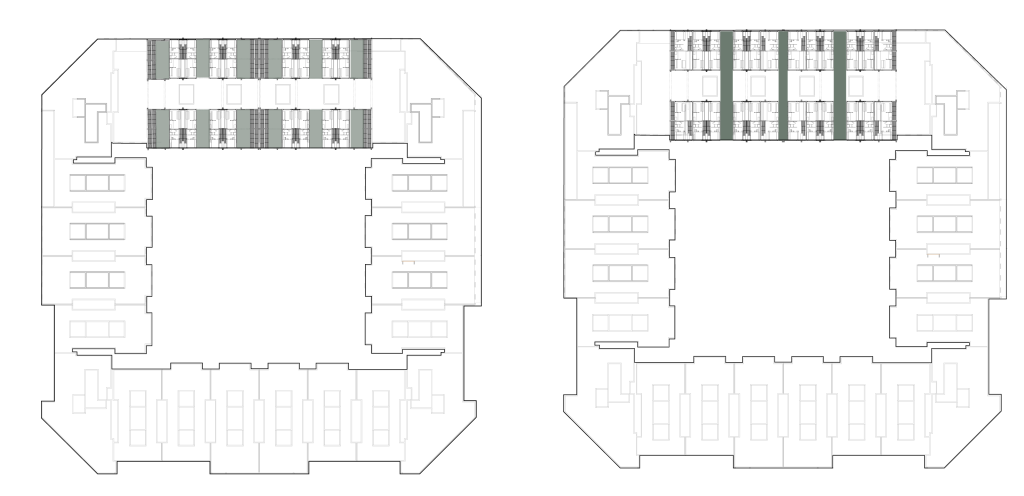
Verde Rooftop Plans
Densification Theme
Adding new spaces as tiny vacation homes can be used for many other purposes, such as small working spots, offices, meeting areas, and united houses. By having flexible, adaptable units for specific uses or leaving some voids for greening and green elements, we can explore the best ways to assemble units that grow horizontally and vertically. These units should ensure they are not generic, have a unique identity, and possess distinctive aesthetic values and geometry. They should also be able to integrate with green elements such as community gardens, butter y gardens, and overall green roof possibilities. The Eixample structure is categorized as load-bearing lines of the existing structure using the reserve load-bearing capacity of the load-bearing lines, which are larger than those on the rooftop itself. This reserve can provide around 15-25% more load-bearing capacity based on the existing reality. Wood and timber construction have been selected as the primary materials for the whole unit and complex, and they are considered the most sustainable materials. Its construction method does not impact and harm the environment, providing a sustainable way based on the design for assembly.